Why You Need a Coach (Not Just a Prescription) When Using GLP-1s

Getting a prescription for Mounjaro or Ozempic is the easy part. What happens after the clinic sends you home with a pen and a leaflet is where most people go wrong.
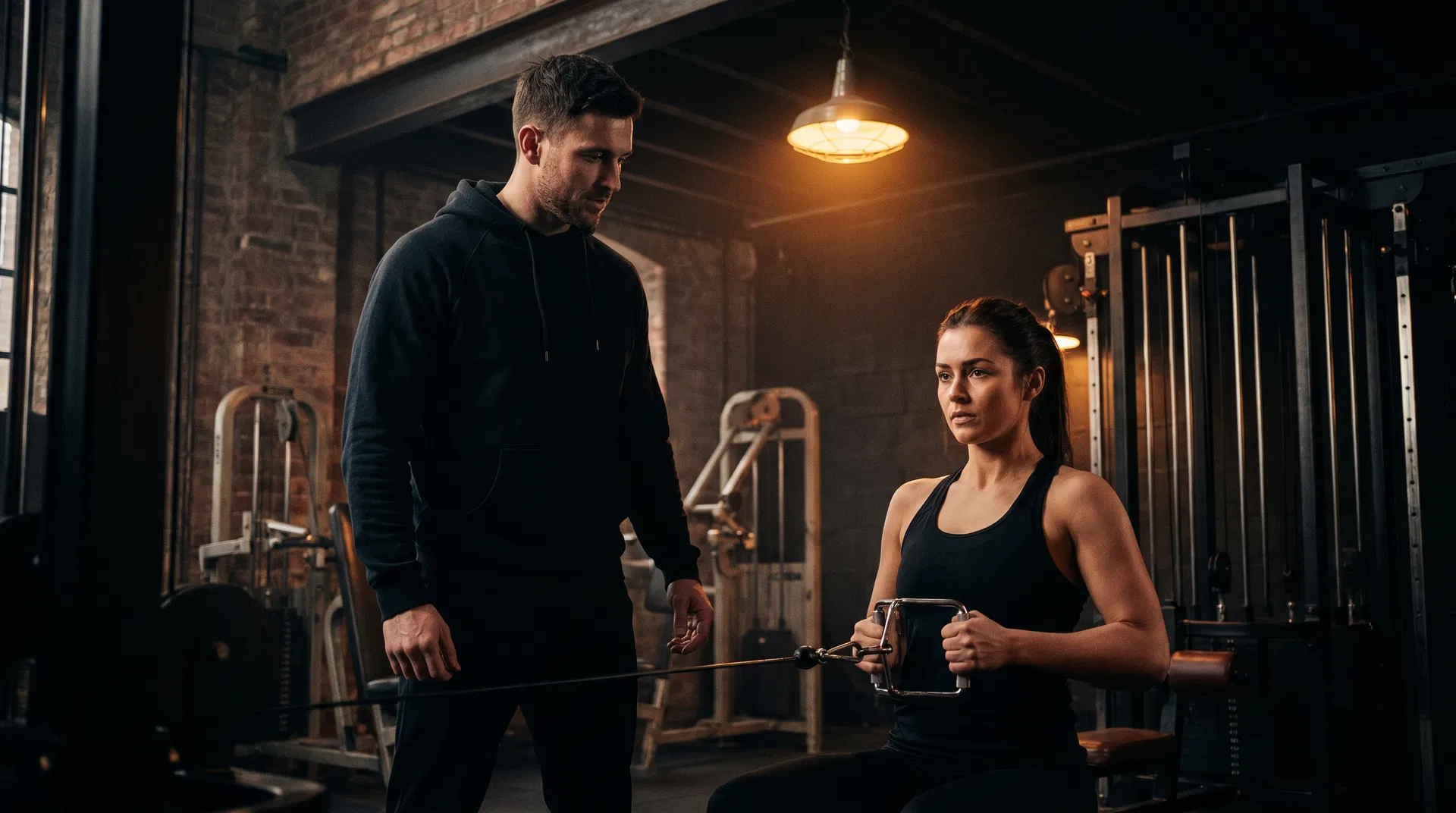
Karen had been on Mounjaro for six months when she came to see me. She'd lost two stone, which sounds like a success story. And in one sense it was — the drug had done exactly what it was supposed to do.
The problem was that she'd also lost a significant amount of muscle. She was weaker than she'd been before she started. She was tired all the time. Her resting heart rate had gone up. She'd been eating around 900 calories a day because the drug had killed her appetite and nobody had told her that wasn't enough. She'd been doing no resistance training because the clinic that prescribed her the medication hadn't mentioned it.
"They just told me to eat less and move more," she said. "That was the whole advice."
She wasn't angry about it. She was just confused. She'd done what she was told, lost the weight, and felt worse than before. She didn't understand why.
I see this more than I'd like to. Not because GLP-1s are bad — they're not, they're genuinely remarkable — but because a prescription without a coaching framework around it is half a solution. You get the weight loss. You don't necessarily get the health.
What a Clinic Gives You (and What It Doesn't)
Private GLP-1 clinics have proliferated across the UK over the past three years. You can get a prescription for semaglutide or tirzepatide online in under 48 hours from dozens of providers. The process is fast, relatively affordable, and largely unsupervised.
What you typically get from a clinic:
- A prescription, issued after a short online consultation
- A starting dose and a titration schedule
- A leaflet about common side effects
- A follow-up appointment in 4-12 weeks
What you typically don't get:
- A structured resistance training programme
- Specific protein targets based on your body weight and goals
- Guidance on how to maintain muscle mass during rapid weight loss
- Support for managing side effects beyond "reduce the dose if you feel sick"
- An exit strategy for when you come off the medication
- Someone who knows your training history, your lifestyle, and your actual goals
This isn't a criticism of clinics. Prescribing doctors are doing their job. But prescribing is not coaching, and for most people, the prescription is the smallest part of what they need.
The Muscle Loss Problem
This is the thing that doesn't get enough airtime in mainstream coverage of GLP-1s.
When you lose weight — through any mechanism, not just GLP-1s — you lose a combination of fat and lean mass. The ratio depends on how fast you're losing, how much protein you're eating, and whether you're doing resistance training. Research consistently shows that without structured exercise and adequate protein, somewhere between 25-40% of weight lost on GLP-1 medications can be lean mass rather than fat [1].
Lean mass matters. Muscle is metabolically active — it burns calories at rest. It protects your joints. It makes you stronger and more capable. And critically, it's what determines whether you can maintain your weight loss after you stop the medication.
The rebound statistics for GLP-1s are sobering. A 2022 study in Diabetes, Obesity and Metabolism found that participants regained two-thirds of their lost weight within one year of stopping semaglutide [2]. That's not a failure of the drug — it's a failure of the framework around the drug. People lost weight without building the habits, the muscle, and the metabolic health that would allow them to maintain it.
A coach's job is to make sure that doesn't happen.
What Coaching Actually Looks Like
When a client comes to me for GLP-1 coaching in Glasgow [blocked], the first thing we do is not talk about the drug. We talk about training.
Specifically: are they doing resistance training? If not, we start there. Not because cardio is bad, but because resistance training is the primary tool for preserving muscle during a calorie deficit. A 2021 study in the New England Journal of Medicine found that combining GLP-1 medication with resistance training preserved significantly more lean mass than medication alone [3]. The drug suppresses appetite and creates the deficit; the training tells your body to keep the muscle.
Then we talk about protein. On a GLP-1, your appetite is suppressed — sometimes dramatically. Most people are eating far less than they think they need to. The target for muscle preservation during weight loss is approximately 1.6-2.2g of protein per kilogram of body weight per day [4]. For a 90kg person, that's 144-198g of protein every day, even when you're barely hungry. That doesn't happen by accident. It requires planning, tracking, and often supplementation.
Then we talk about the exit plan. This is the conversation most clinics never have. What happens when you stop? How do you taper off? How do you maintain the habits you've built? How do you manage the return of appetite without regaining everything you've lost? The exit plan is where the coaching work really pays off — because the clients who've built the habits, the muscle, and the metabolic health during their protocol are the ones who keep the results.
The Three Tiers of Support
At Generation Health & Fitness [blocked], we offer three levels of coaching support for clients using GLP-1s and peptides. The right tier depends on where you are and what you need.
Tier 1 — Foundation is for people who are new to GLP-1s or who are currently on a prescription but haven't had any structured support. We build the training programme, set the nutrition targets, and check in monthly. This is the minimum viable framework — the things you need to do to make the drug work properly and keep the results.
Tier 2 — Active Coaching is for people who want more hands-on support — weekly check-ins, training adjustments, nutrition troubleshooting, and help managing side effects. This is the tier most clients end up on, because the reality of being on a GLP-1 is that things change week to week. Your appetite fluctuates. Your energy levels shift. Your training needs to adapt.
Tier 3 — Full Programme is for clients who want the complete picture — training, nutrition, peptide protocol design (in consultation with a prescribing doctor), body composition tracking, and long-term maintenance planning. This is for people who are serious about the process and want to do it properly from start to finish.
Karen, when she came to me, started on Tier 2. We rebuilt her training programme around compound lifts three times a week. We got her protein up to 140g a day using a combination of whole foods and protein shakes. We increased her calories to a sustainable deficit rather than the near-starvation she'd been operating at. Within eight weeks, her energy was back. Within twelve, she was stronger than she'd been before she started the drug.
The weight loss slowed down. But the body composition improved. And that's the actual goal.
Why This Matters More Than the Drug Choice
I get asked a lot about which GLP-1 is best — semaglutide versus tirzepatide, tirzepatide versus retatrutide. And those are legitimate questions. The compounds are genuinely different, and the choice matters. (If you want the full breakdown, read GLP-1 vs Retatrutide: Which One Is Actually Right For You? [blocked].)
But here's the truth: the coaching framework matters more than the drug choice.
A client on semaglutide with a proper training programme, adequate protein, and a structured exit plan will get better long-term results than a client on retatrutide who's eating 900 calories a day and doing no resistance training. The drug is the accelerant. The coaching is the engine.
This is not a popular message in a world where people want a quick fix. But it's the honest one. The research backs it up. And the clients who've been through the full programme — training, nutrition, protocol, exit plan — are the ones who are still at their goal weight two years later.
The Compliance Question
There's a conversation that needs to happen more openly in the GLP-1 space about what coaches can and can't do.
To be absolutely clear: I am not a doctor. I do not prescribe peptides. I do not supply peptides. My role is to provide the coaching framework — the training, the nutrition, the habits — that makes a medically supervised peptide protocol work properly.
If you're considering GLP-1s or peptides, you need a prescribing doctor. Full stop. What I provide is the support structure around that prescription that most clinics don't offer. The two things are complementary, not interchangeable.
This matters because there are coaches out there who blur that line. They're not doing their clients any favours. The medical supervision matters — for monitoring, for dose adjustment, for catching problems early. The coaching matters for everything else.
What to Do If You're Already on a Prescription Without Support
If you're currently on a GLP-1 prescription and you haven't had any structured coaching support, here's where to start:
Get your protein in. Work out your target — approximately 1.6-2.2g per kilogram of body weight per day — and start tracking. If you're not hitting it, add a protein shake. This is the single most important thing you can do to protect your muscle.
Start lifting. You don't need to be in a gym five days a week. Three sessions a week of compound movements — squats, deadlifts, rows, presses — is enough to send the signal to your body to keep the muscle. If you don't know where to start, come and see us. Personal training in Glasgow [blocked] is exactly what it sounds like.
Plan your exit. Even if you're months away from stopping the medication, start thinking about what happens after. How will you manage the return of appetite? What habits are you building now that will carry over? The exit plan is not an afterthought — it's the whole point.
Download the free GLP-1 Nutrition Protocol [blocked]. It covers the four levers that determine whether you keep the weight off: protein, strength training, fluids, and the exit plan. It's free. It's 15 pages. It's the framework I give every client who comes to me on a GLP-1.
And if you want to talk through your specific situation, book a consultation call. No pressure, no hard sell. Just an honest conversation about where you are and what you need.
Karen, for the record, is doing well. She's maintained her weight loss for over a year now. She's stronger than she's ever been. She's off the medication. And she comes in three times a week and lifts weights like someone who knows what they're doing.
The drug got her started. The coaching kept her there.
Related reading: GLP-1 vs Retatrutide: Which One Is Actually Right For You? [blocked] · Muscle Preservation on GLP-1s: The Protein-First Protocol [blocked] · How to Lose Fat Without Losing Muscle [blocked] · The Truth About Calorie Deficits [blocked]
Compliance Notice: Generation Health & Fitness provides education and lifestyle coaching support. We are not medical professionals, we do not prescribe peptides, and we do not supply peptides. All peptide prescriptions must come from a licensed healthcare provider. Nothing in this article constitutes medical advice.
References
[1] Wilding JPH et al. "Once-Weekly Semaglutide in Adults with Overweight or Obesity." New England Journal of Medicine, 2021. https://www.nejm.org/doi/full/10.1056/NEJMoa2032183
[2] Wilding JPH et al. "Weight regain and cardiometabolic effects after withdrawal of semaglutide." Diabetes, Obesity and Metabolism, 2022. https://dom-pubs.onlinelibrary.wiley.com/doi/10.1111/dom.14725
[3] Lundgren JR et al. "Healthy Weight Loss Maintenance with Exercise, Liraglutide, or Both Combined." New England Journal of Medicine, 2021. https://www.nejm.org/doi/full/10.1056/NEJMoa2028198
[4] Morton RW et al. "A systematic review, meta-analysis and meta-regression of the effect of protein supplementation on resistance training-induced gains in muscle mass and strength in healthy adults." British Journal of Sports Medicine, 2018. https://bjsm.bmj.com/content/52/6/376
About Charlie
Charlie has been coaching clients in Glasgow's East End since 2020. He specialises in fat loss, peptide and GLP-1 coaching, and runs Generation Health & Fitness in Bridgeton with his business partner Craig. He's REPS UK registered, CIMSPA Education Partner certified, and Precision Nutrition qualified. He's helped over 100 clients lose fat sustainably without extreme diets.
Credentials
REPS UK Registered · CIMSPA Education Partner · Level 3 Personal Trainer · Precision Nutrition Level 1 · Peptide & GLP-1 Researcher

27 April 2026
How Many PT Sessions Do You Actually Need to See Results?
One of the most common questions we get. The honest answer depends on your goals, your starting point, and how much you're willing to put in between sessions.

13 April 2026
What to Expect from Your First Personal Training Session in Glasgow
Nervous about your first PT session? Don't be. Here's exactly what happens, what to bring, and how to get the most out of it from day one.

2 April 2026
Personal Training vs Going to the Gym Alone: Which Gets Better Results?
Both have their place, but if you're serious about getting results, the answer might surprise you. Here's the honest comparison from a Glasgow personal trainer.