How to Track Calories Without Going Mad: A Glasgow Perspective

Calorie tracking doesn't have to be obsessive. Learn the smart way to track your intake without losing your mind—practical tips from a Glasgow personal trainer.
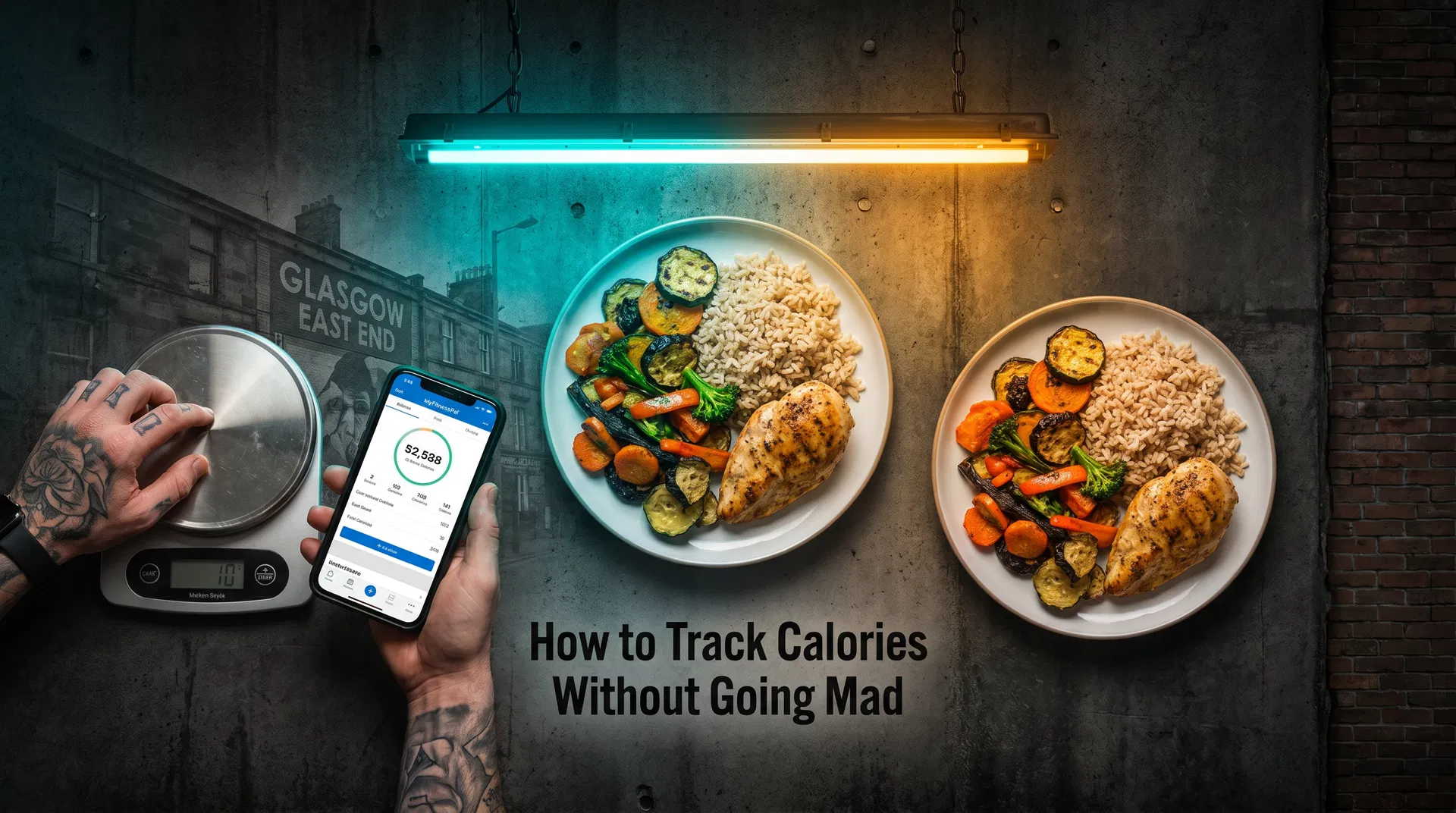
How to Track Calories Without Going Mad: A Glasgow Perspective
You're standing in the kitchen at 9 PM, staring at a plate of pasta, wondering if you should weigh it or just eyeball it. Your phone's got MyFitnessPal open. The calculator's out. And you're thinking, "Is this worth the hassle?"
I get it. I've been there. And I've seen hundreds of people in Glasgow's East End start their fitness journey, only to quit calorie tracking because it felt like a second job. The thing is, tracking doesn't have to be that mental. It's not about obsessing over every gram. It's about being intentional—and knowing when to stop being so strict.
Why Most People Hate Tracking (And Why They Quit)
The biggest mistake I see? People treat calorie tracking like a prison sentence. They download an app, log everything perfectly for two weeks, hit a plateau, get frustrated, and bin it off entirely.
Here's the reality: Perfect tracking doesn't exist. Your scales are off by 10%. The app's database has wrong entries. You're estimating portion sizes. And that's fine. You don't need perfection—you need consistency.
The second mistake is tracking everything. Black coffee? Logged. A handful of nuts? Weighed and entered. That's the path to burnout. You'll be spending 20 minutes a day on your phone instead of actually training.
The Smart Way to Track (Without Losing Your Mind)
Start with the Big Three
Focus on protein, carbs, and fats first. Forget the micronutrients for now. Forget the fibre breakdowns. Just get those three right, and you're 80% there.
Why? Because these three determine your calorie total. And your calorie total determines whether you lose fat, maintain, or build muscle. Everything else is noise.
Here's what I tell my clients:
- Protein: Aim for 0.7–1g per pound of bodyweight. This preserves muscle when you're in a deficit and keeps you full.
- Carbs: Fill the rest of your calories after protein and fats. Carbs are flexible—adjust them based on how you feel and your training.
- Fats: Aim for 0.3–0.4g per pound. Don't go below this—your hormones need it.
Use the 80/20 Rule
Log the big stuff. Ignore the tiny stuff.
A chicken breast? Log it. A pinch of salt? Forget it. A piece of bread? Log it. The spray oil you used to cook? You can skip it (it's negligible anyway).
This cuts your tracking time in half and removes the mental burden. You're capturing 90% of your intake without the obsession.
Batch Your Meals
Eat the same breakfast every day. Same lunch three days a week. Same dinner four nights a week. This isn't boring—it's smart.
Why? Because you only have to log once. Monday's chicken and rice? You log it on Monday. Tuesday through Thursday? Copy-paste. Done.
I know people in Glasgow who've been eating the same porridge every morning for two years. They're not bored—they're consistent. And consistency beats perfection every single time.
Use Your Phone, But Don't Live on It
MyFitnessPal, Cronometer, Lose It—they're all decent. Pick one and stick with it. Don't switch apps every month chasing the "perfect" one.
Here's the workflow that actually works:
- Log your breakfast when you eat it (takes 30 seconds).
- Log your lunch at lunch (30 seconds).
- Log your dinner at dinner (30 seconds).
- Before bed, check your total and adjust if needed (2 minutes).
That's it. Five minutes a day. Not an hour.
The Weekly Weigh-In (Not Daily)
Weigh yourself once a week, same day, same time. I recommend Monday morning before breakfast.
Why not daily? Because your weight fluctuates 2–3 lbs based on water, food timing, and hormones. You'll drive yourself mad checking daily. Weekly gives you the real trend.
If you're losing 1–2 lbs per week, you're in a good deficit. If nothing's changed after two weeks, drop calories by 200–300 and try again.
The Mistakes I See People Make
Mistake 1: Underestimating Calories
You think you're eating 1,800 calories. You're actually eating 2,200. Your app's database has wrong entries. You're underestimating portion sizes. This is the #1 reason people don't lose weight.
Solution: Weigh your food for the first two weeks. Get a cheap kitchen scale (£5 from Poundland). You'll be shocked at how much you're actually eating.
Mistake 2: Being Too Strict
You hit your calorie target perfectly for three weeks. Then you go to the pub on Friday, have a few pints and a kebab, and think you've ruined everything. You quit.
Reality: One meal doesn't ruin progress. One week doesn't ruin progress. Get back on track Monday. That's it.
Mistake 3: Not Adjusting as You Lose Weight
You started at 200 lbs eating 2,000 calories. You've lost 20 lbs. You're still eating 2,000 calories. And you've stalled.
Why? Because your body needs fewer calories now. You need to drop calories by 200–300 every 10–15 lbs lost.
Mistake 4: Ignoring How You Feel
You're hitting your calories perfectly. But you're tired, irritable, and your training's suffering. That's your body telling you something's wrong.
Solution: Eat more. Seriously. Your mental health and training performance matter more than hitting a number. Adjust and move on.
The Real Secret: Tracking Teaches You
Here's what most people don't realize: Tracking isn't forever. It's a tool to teach you portion sizes and calorie awareness.
After 4–6 weeks of tracking, you'll start to know roughly how many calories are in things. You'll eyeball a plate of food and think, "That's about 500 calories." You won't need the app anymore.
I've got clients who tracked for two months, learned what they needed to know, and now eat intuitively. They maintain their results without logging a single thing.
How to Know When to Stop Tracking
Stop tracking when:
- You've hit your goal weight or body composition
- You understand portion sizes and calorie density
- You can maintain without obsessing
- Your mental health improves
Keep tracking when:
- You're in an active fat loss or muscle-building phase
- You're new to fitness and still learning
- You're competing or have a specific deadline
The Bottom Line
Calorie tracking isn't about perfection. It's about awareness. It's about understanding what your body needs and being intentional with your food choices.
Start simple. Log the big stuff. Batch your meals. Weigh yourself weekly. And remember: consistency beats perfection. You don't need to be 100% accurate. You need to be 80% consistent.
And if you're struggling to figure out your calorie targets or need help adjusting as you progress? That's exactly what I'm here for. Book a free 15-minute consultation [blocked], and we'll get you sorted.
The hardest part isn't the tracking—it's starting. So start today. Pick one meal. Log it. Tomorrow, pick two. By next week, you'll have a rhythm.
You've got this.
— Charlie
About Charlie
Charlie has been coaching clients in Glasgow's East End since 2020. He specialises in fat loss, peptide and GLP-1 coaching, and runs Generation Health & Fitness in Bridgeton with his business partner Craig. He's REPS UK registered, CIMSPA Education Partner certified, and Precision Nutrition qualified. He's helped over 100 clients lose fat sustainably without extreme diets.
Credentials
REPS UK Registered · CIMSPA Education Partner · Level 3 Personal Trainer · Precision Nutrition Level 1 · Peptide & GLP-1 Researcher