GLP-1 vs Retatrutide: Which One Is Actually Right For You?

Ozempic, Wegovy, Mounjaro, retatrutide — everyone's got an opinion. Here's what the research actually says, and how a Glasgow PT decides which protocol fits which client.
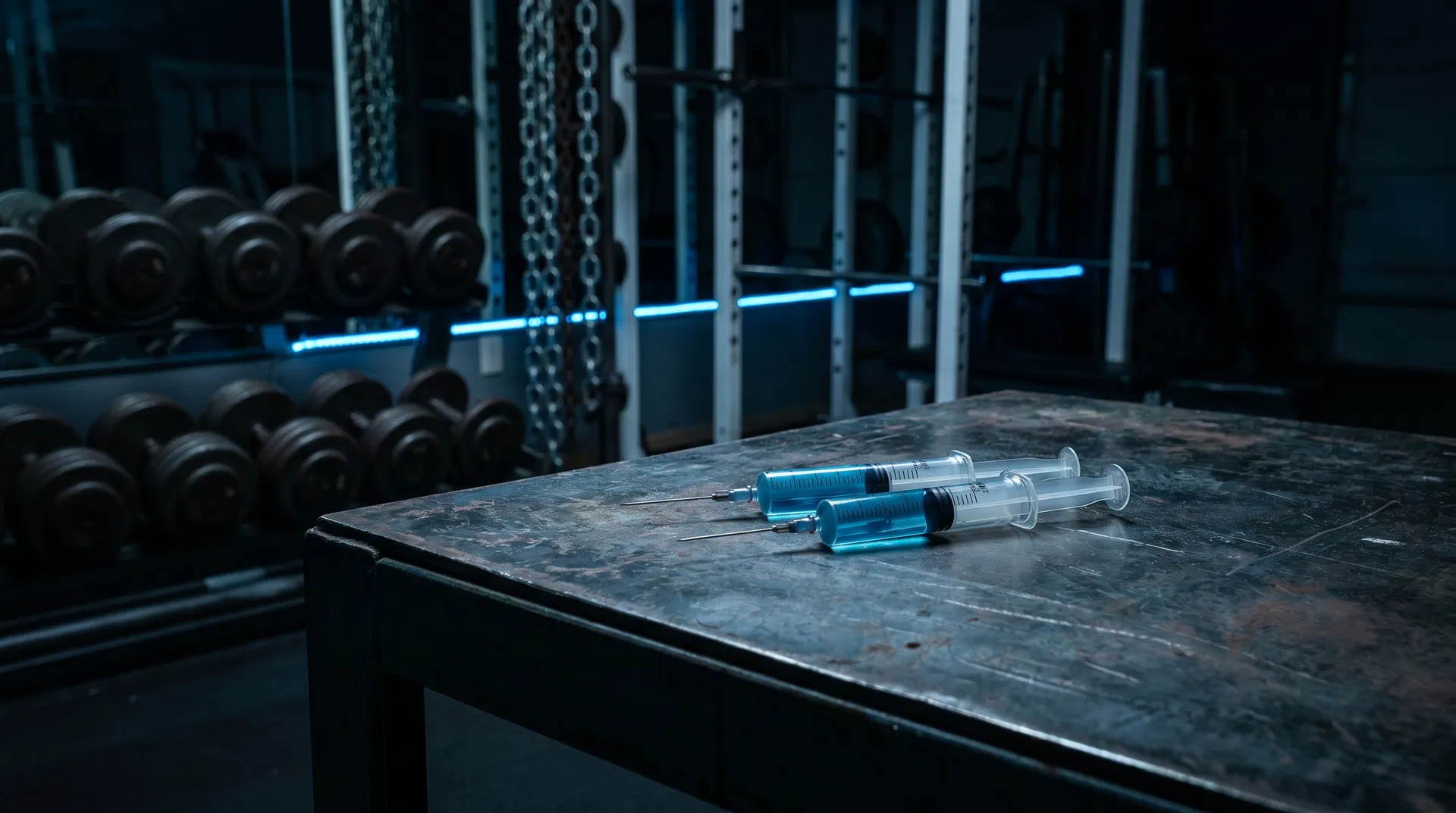
Gary came into the gym in January looking like a man who'd been doing his homework. He had a printout. An actual printout, folded in thirds, covered in highlighter. He'd been on semaglutide for four months, lost about a stone and a half, and was now reading about retatrutide on Reddit at midnight. He wanted to know if he should switch.
"I've seen people losing three stone on this stuff," he said, sliding the printout across the desk. "Is it better? Should I be on that instead?"
I've had this conversation a dozen times in the past year. The names change — sometimes it's Mounjaro versus Ozempic, sometimes it's tirzepatide versus retatrutide — but the question is always the same: which one is better?
The honest answer is that it depends entirely on who you are, what you're trying to do, and what stage you're at. There's no universal winner. But there are real, meaningful differences between these compounds, and if you're going to make an informed decision — or have an informed conversation with a prescribing doctor — you need to understand what those differences actually are.
This is what I told Gary. It's what I tell every client who walks in with a printout.
What We're Actually Comparing
Let's start with the basics, because the terminology gets confusing fast.
GLP-1 agonists are a class of drugs that mimic glucagon-like peptide-1, a hormone your gut releases after eating. GLP-1 signals to your brain that you're full, slows gastric emptying, and helps regulate blood sugar. Semaglutide (Ozempic, Wegovy) is a GLP-1 agonist. It's been around since 2017 and has the most long-term safety data of any drug in this space.
Tirzepatide (Mounjaro, Zepbound) is a dual agonist — it targets both GLP-1 and GIP (glucose-dependent insulinotropic polypeptide). GIP is another gut hormone that works slightly differently to GLP-1, and the combination appears to be more effective for weight loss than GLP-1 alone. The SURMOUNT-1 trial showed average weight loss of around 20.9% of body weight at the highest dose [1], which was a step change from what semaglutide was producing.
Retatrutide is a triple agonist — GLP-1, GIP, and glucagon. That third receptor is the interesting one. Glucagon increases energy expenditure and fat mobilisation, which is why retatrutide's early trial data is so striking. A Phase 2 trial published in the New England Journal of Medicine in 2023 showed average weight loss of 24.2% at 48 weeks at the highest dose [2]. That's the most weight loss ever recorded in a pharmacological trial. It's not approved yet — it's still in Phase 3 trials as of early 2026 — but it's coming, and people are already accessing it through research chemical suppliers.
| Compound | Mechanism | Avg. Weight Loss (trials) | Approval Status (UK) |
|---|---|---|---|
| Semaglutide (Ozempic/Wegovy) | GLP-1 agonist | ~15% body weight | Approved (prescription) |
| Tirzepatide (Mounjaro) | GLP-1 + GIP dual agonist | ~21% body weight | Approved (prescription) |
| Retatrutide | GLP-1 + GIP + Glucagon triple agonist | ~24% body weight | Not yet approved (Phase 3) |
Why More Isn't Always Better
Here's the thing that doesn't get said enough: the number on the scale is not the only thing that matters.
When you lose weight rapidly — and all of these compounds produce rapid weight loss — you lose a mixture of fat and muscle. The faster you lose, and the less you do to protect your muscle, the worse that ratio gets. Research consistently shows that 25-35% of weight lost on GLP-1 medications can be lean mass [3], and that figure gets worse the more aggressive the protocol.
Retatrutide's glucagon component adds another wrinkle. Glucagon is catabolic — it breaks down stored energy, including muscle glycogen and, potentially, muscle protein. The Phase 2 data didn't show catastrophic muscle loss, but it also wasn't powered to detect it, and the participants weren't doing structured resistance training. In a real-world scenario with someone who isn't training properly and isn't hitting protein targets, the muscle loss risk on retatrutide is likely higher than on semaglutide.
This is why I always say to clients: the drug is one variable. Your training and nutrition are the other variables, and they matter just as much.
Gary, for what it's worth, was doing cardio three times a week and eating about 80g of protein a day. For his body weight, he needed closer to 150g. He was already losing muscle on semaglutide. Switching to a more aggressive compound without fixing the fundamentals would have made that worse.
Side Effect Profiles: What to Expect
The side effects across all three compounds are broadly similar — nausea, vomiting, constipation, fatigue — because they all work through overlapping mechanisms. But there are differences in intensity and character.
Semaglutide tends to produce more pronounced nausea, particularly in the early weeks. Most people adapt within 4-8 weeks. The weekly injection schedule is manageable, and the dose titration is well-established.
Tirzepatide often produces less nausea than semaglutide at equivalent efficacy doses, which is counterintuitive given that it's more effective. The GIP component appears to have a moderating effect on GLP-1-induced nausea [4]. Constipation is more commonly reported with tirzepatide, and some clients find the appetite suppression more aggressive — which sounds like a good thing until you're struggling to eat enough protein.
Retatrutide adds the glucagon component, which can cause increased heart rate, sweating, and a more pronounced energy expenditure effect. Some users report feeling warmer and more energetic, which is the glucagon doing its job. Others find it uncomfortable. The nausea profile in Phase 2 was similar to tirzepatide, but again — this is trial data, not real-world experience at scale.
Who Should Be on What
This is the question Gary actually wanted answered, and it's the one I spend the most time on with clients who come to me for peptide coaching in Glasgow [blocked].
Semaglutide (Ozempic/Wegovy) is still the right starting point for most people. It's the most studied, the safest from a long-term data perspective, and the dose titration is the most forgiving. If you're new to GLP-1s, haven't done this before, and don't have a structured training and nutrition protocol in place, start here. The goal is to build the habits while the drug does its job — not to maximise weight loss at the expense of everything else.
Tirzepatide (Mounjaro) makes sense for people who've already been through a semaglutide cycle, understand how their body responds to GLP-1s, and have their training and nutrition dialled in. The additional efficacy is real, but so is the additional appetite suppression — you need to be disciplined about hitting protein targets when you're barely hungry. I work with clients on GLP-1 coaching in Glasgow [blocked] specifically to manage this transition.
Retatrutide is, right now, for people who understand that they're using an unapproved compound, have done their research, are working with a doctor for monitoring, and have already been through at least one full GLP-1 cycle. The weight loss data is extraordinary, but the long-term safety data doesn't exist yet. If you're considering it, you need bloodwork before, during, and after. You need to be training with weights. You need to be eating enough protein. And you need to be honest with yourself about why you want the most aggressive option. If the answer is impatience, that's worth examining.
For clients who want to explore the full spectrum of options, I offer retatrutide coaching in the UK [blocked] as part of a structured programme that includes training, nutrition, and regular check-ins.
The Conversation Nobody's Having
There's a version of this conversation that happens in GP surgeries and weight loss clinics across the UK every day: patient comes in, gets a prescription, gets sent home with a pen and a leaflet. No training advice. No nutrition guidance. No follow-up on muscle mass or metabolic health. Just a drug and a hope.
That's not coaching. And for most people, it's not enough.
The research on GLP-1s is clear that exercise — particularly resistance training — dramatically improves outcomes. A 2023 study in Obesity found that combining semaglutide with resistance training preserved significantly more lean mass than semaglutide alone [5]. The drug suppresses appetite; the training tells your body to keep the muscle. You need both.
This is the gap that peptide coaching [blocked] fills. Not prescribing. Not supplying. Coaching — helping people build the habits, the training programme, and the nutrition protocol that makes the drug work properly and keeps the results after the prescription ends.
Gary, by the way, didn't switch to retatrutide. He fixed his protein intake, started lifting three times a week, and lost another 12kg over the following four months — on the same semaglutide dose he'd been on when he walked in. The drug was already working. He just needed to give it something to work with.
Practical Takeaways
If you're trying to decide between GLP-1s, here's the framework I use with clients:
Start with semaglutide unless you have a specific reason not to. Build the habits first. Get your protein in. Start lifting. See how your body responds.
Consider tirzepatide if you've completed a semaglutide cycle, you're training consistently, and you want to push further. Work with a prescribing doctor and a coach who understands the compound.
Approach retatrutide with caution. The data is exciting. The compound is genuinely different. But it's unapproved, the long-term data doesn't exist, and the glucagon component adds complexity that most people aren't ready for. If you're going to use it, do it properly.
And whatever you're on — download the free GLP-1 Nutrition Protocol [blocked]. It covers the four things that actually determine whether you keep the weight off: protein targets, strength training, fluids, and the exit plan. The drug gets you there. The protocol keeps you there.
Related reading: Why You Need a Coach, Not Just a Prescription [blocked] · Muscle Preservation on GLP-1s: The Protein-First Protocol [blocked] · How to Lose Fat Without Losing Muscle [blocked] · The Truth About Calorie Deficits [blocked]
Compliance Notice: Generation Health & Fitness provides education and lifestyle coaching support. We are not medical professionals, we do not prescribe peptides, and we do not supply peptides. All peptide prescriptions must come from a licensed healthcare provider. Nothing in this article constitutes medical advice.
References
[1] Jastreboff AM et al. "Tirzepatide Once Weekly for the Treatment of Obesity." New England Journal of Medicine, 2022. https://www.nejm.org/doi/full/10.1056/NEJMoa2206038
[2] Jastreboff AM et al. "Triple–Hormone-Receptor Agonist Retatrutide for Obesity — A Phase 2 Trial." New England Journal of Medicine, 2023. https://www.nejm.org/doi/full/10.1056/NEJMoa2301972
[3] Wilding JPH et al. "Once-Weekly Semaglutide in Adults with Overweight or Obesity." New England Journal of Medicine, 2021. https://www.nejm.org/doi/full/10.1056/NEJMoa2032183
[4] Coskun T et al. "LY3298176, a novel dual GIP and GLP-1 receptor agonist for the treatment of type 2 diabetes mellitus and obesity." Molecular Metabolism, 2018. https://www.sciencedirect.com/science/article/pii/S2212877818308676
[5] Lundgren JR et al. "Healthy Weight Loss Maintenance with Exercise, Liraglutide, or Both Combined." New England Journal of Medicine, 2021. https://www.nejm.org/doi/full/10.1056/NEJMoa2028198
About Charlie
Charlie has been coaching clients in Glasgow's East End since 2020. He specialises in fat loss, peptide and GLP-1 coaching, and runs Generation Health & Fitness in Bridgeton with his business partner Craig. He's REPS UK registered, CIMSPA Education Partner certified, and Precision Nutrition qualified. He's helped over 100 clients lose fat sustainably without extreme diets.
Credentials
REPS UK Registered · CIMSPA Education Partner · Level 3 Personal Trainer · Precision Nutrition Level 1 · Peptide & GLP-1 Researcher

16 February 2026
BPC-157 and TB-500: The Recovery Peptides Every Serious Trainer Should Know About
BPC-157 and TB-500 are two of the most powerful recovery peptides available to serious trainers. Here's what they do, how they differ, and why more athletes are turning to them to heal faster and train harder.

19 January 2026
The Peptide Revolution: Retatrutide, MOTS-C, KLOW & Tesamorelin Explained
Peptides are exploding in popularity — and for good reason. Here's an honest breakdown of the four most talked-about peptides right now, the real concerns, and why I believe they're a game-changer for the right person.